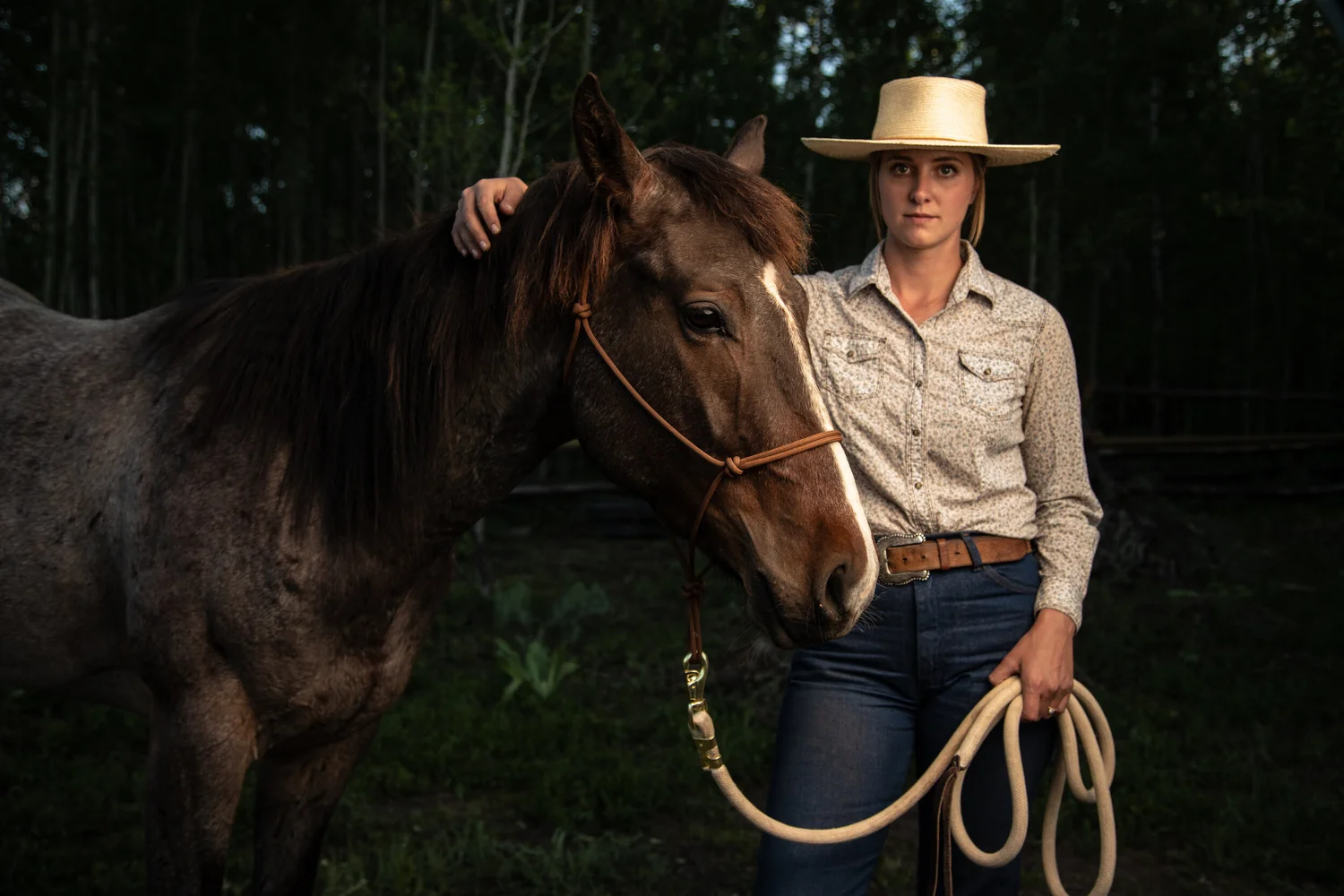
There is an easy way to photograph the West: hats, dust, mountains, sunset. The problem is everyone has already seen that photograph.
None of those things are wrong. They are part of the place. The trouble starts when they become the whole idea.
Jackson Hole does not need help looking Western. Wyoming does not need a costume department to explain itself. The more useful question is what makes a person, job or place feel specific before the obvious symbols show up.
Start with the person.
Posture tells you a lot. So do hands, clothes that have actually been worn, the way someone stands around an animal or a truck, and whether they look comfortable in the weather. Those details carry more weight than adding another prop.
If the subject belongs there, the frame usually knows it. The photographer's job is to notice before trying to improve it.
Place should be felt before it is explained.
Let the landscape be context.
The Tetons can dominate a frame without even trying. Sometimes that is the picture. Sometimes the better decision is to let the mountains sit in the background and pay attention to the person in front of them.
A location should add information. Weather, distance, elevation, road dust, timber, snow and open ground can all do that. A famous peak is not required every time.
Do not clean the life out of it.
Commercial photography still has to be useful. Wardrobe needs attention. Backgrounds need attention. Light needs attention. But there is a point where polishing a frame starts removing the reason it was interesting.
A scuffed boot can stay scuffed. A truck can have mud on it. Wind can move hair. The West is not improved by pretending none of that happens.
The line I keep coming back to.
Character before costume.
It is a simple test. If the frame only reads Western because of a hat, a horse or a mountain, there may not be much underneath it. If the person and place already feel specific, those elements become part of the picture instead of the entire point.